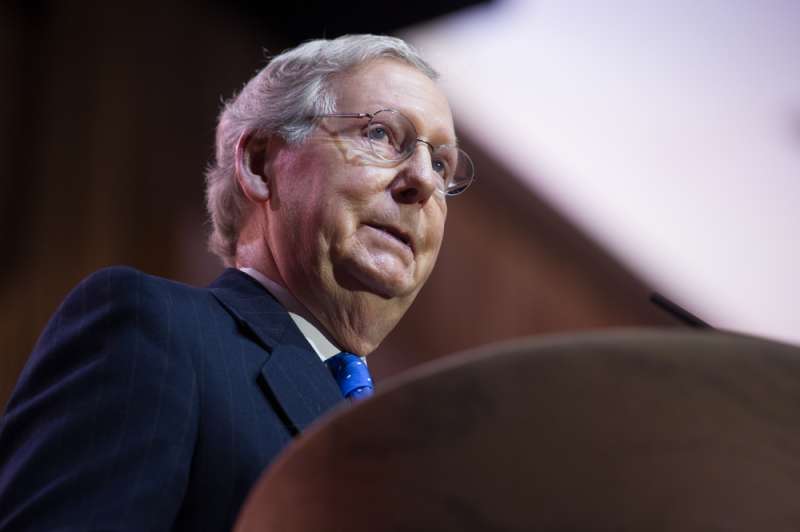
Apropos of nothing, and certainly not to imply Kentucky’s senior senator is dying, but we’ve heard your questions: If one of Kentucky’s seats in Washington DC happens to become vacant, what happens?
Kentucky is one of five states that requires some sort of election to fill a vacancy in the US Senate. (The other four, should you be interested, are North Dakota, Oregon, Rhode Island, and Wisconsin.)
This means Democratic Gov. Andy Beshear does not get to pick someone to fill a vacant seat—even as a short-term appointment. (But more on that in a bit.)
Kentucky’s governor used to be able to temporarily appoint someone to fill a vacancy, but the state’s Republican-led legislature has whittled away that authority over the last few years since Beshear became governor.
Shortly into Beshear’s first term as governor, the legislature limited the governor’s appointment power to needing to pick someone from a short list of options from the outgoing senator’s political party—preventing Beshear from picking a Democrat. In 2024, the legislature removed the governor’s role in the selection process entirely, requiring the spot to be filled via election.
Now, Kentucky would typically need to hold a special election to fill a US Senate vacancy. Both major political parties would pick their candidates, and those candidates would face off to see who wins the seat. The special election winner would get to stay in the seat for the rest of the term, according to state law.
It is not clear what would happen if a vacancy were to occur a few months before a general election, like what could happen in the coming months should US Sen. Mitch McConnell step down or die. McConnell already planned on not running for reelection this fall, and both parties had contested primaries to pick Democrat Charles Booker and Republican Andy Barr as their candidates for November’s election.
All that said, it is important to note that Kentucky’s vacancy process hasn’t been tested yet, and Beshear and others have raised questions about whether or not the 2024 law violates Kentucky’s constitution.
“There’s a Kentucky constitutional provision that says I appoint all state officers when there’s a vacancy,” Beshear said in a mid-July TV interview. “The question is does that apply to federal offices.”
Before there were specific state laws around how vacancies should be filled, Beshear continued, governors had made multiple appointments assuming that the state constitution allowed them to do so.
“If we end up there,” Beshear said, “there’s at least going to be a little disagreement.”
This story has been updated, and will continue to be updated if/when we learn more.