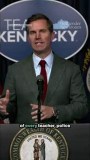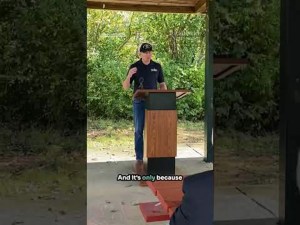
When KET kicked off its string of televised candidate debates in early October ahead of Kentucky’s 2026 midterm elections, only one of the two invited candidates showed up.
The week after, the same thing happened.
And, according to KET’s debate schedule, that pattern is expected to continue for the remaining debates: Multiple candidates vying for federal office, but only one of them planning on explaining their policy ideas or defending their records to voters.
This isn’t just a KET issue, nor is it isolated to those running high-profile federal races. What’s happening is a part of a larger trend in Kentucky: Fewer political candidates are seemingly interested in—or willing to—debate their opponents.
Several candidates told Hellbender Newsroom that there won’t be a public debate in their race at all after their opponents—often Republican incumbents—either declined debate invites or simply ignored requests altogether.
This sparks a range of issues, they said. Incumbents aren’t defending their time in office to those they’re already serving. Challengers aren’t able to question their opponents’ records or pitch their own policy ideas. And voters are robbed of a chance to hear directly from those seeking to represent them.
“Town halls and debates are simultaneously performance reviews for the incumbent and hiring interviews for challengers,” said Melina Hettiaratchi, who is running for a seat on Louisville’s Metro Council against an incumbent who has been on the council since its inception more than two decades ago.
“It’s incredibly important that all candidates encourage civic engagement and participation,” she continued, “and I don’t even get the chance when the incumbent won’t show up.”
How political debates work in Kentucky
News outlets and civically minded groups like the League of Women Voters are typically the ones organizing candidate debates and forums in Kentucky.
Some outlets, like KET, establish criteria for making the debate stage, which can often exclude third-party candidates or those who aren’t polling well or raising enough money. But once a candidate meets the criteria for a debate, they’ve got a spot in front of their audience—even if their opponent doesn’t want to be there.
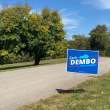
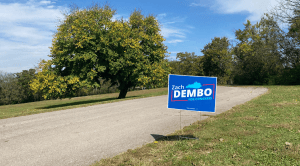
For example, Democrats Charles Booker and Zach Dembo—who are running for US Senate and Kentucky’s 6th Congressional District, respectively—both got 30-minute-long, one-on-one interviews on KET, broadcast to the entire state, because they showed up when their opponents didn’t.
In other situations, though, if one candidate is out, they’re both out.
Gail Henson, the co-president of Louisville’s League of Women Voters, said the nonpartisan organization aims to protect democracy and empower voters.
“Voters need to hear from candidates to be informed voters,” Henson said.
This fall, they tried to organize nearly 30 debates including Louisville Metro Council races and state House and Senate seats that include part of Louisville. But almost none of those debates have happened, or will.
In some situations, candidates didn’t respond; in others, one candidate said yes but the other said no. LWV doesn’t have “empty chair” debates, Henson said, so if both candidates won’t be there with each other, the debate is canceled.
Are debates even worth it?
As University of Kentucky political science professor D. Stephen Voss explained, “Debates have never been in the interest of candidates who think they’re leading.”
The people who tend to show up to or watch a political debate, Voss said, “tend to be activist types who already know how they’re voting, so they’re not persuadable.”
And “the only way swing voters are likely to learn what happened is if a candidate messes up,” he continued.
“Your candidate might be a poor debater. Your opponent might be especially good. You might not want to validate an opponent by sharing a stage,” Voss said.
Debates “bring high risk but limited potential reward,” he added, and voters are not as loyal to the ideals behind candidate debates as they may think they are, so few voters will respond negatively if a candidate skips a debate.
But some Republicans consider LWV to be too partisan to give them a fair shake. Michael Frazier, a conservative lobbyist, recently blasted LWV on social media for posting about upcoming No Kings Day rallies on their own social media channels.
“You cannot simultaneously engage in political advocacy and expect conservative and free-market candidates to simply accept your organization as an impartial moderator of their debates,” Frazier tweeted.
What are candidates saying about debates?
A poor performance at a political debate, as Voss alluded to, can torpedo a campaign or launch an embarrassing viral moment.
But the candidates Hellbender Newsroom talked to yearned for the debate stage.
Rep. Adam Moore, a Lexington Democrat running for reelection against his Republican predecessor, said he thinks “live or public debates and forums are incredibly valuable.”
“Otherwise, all voters see are your mail and TV ads on which you can put whatever you want about yourself,” Moore said. “In a debate or forum environment, you actually have to be a real human being and voters can compare and contrast them in a neutral environment.”
Moore is one of a few incumbents who said attempts to get their opponent on the debate stage heading into Kentucky’s 2026 midterm elections were futile. Many others told Hellbender they were having the opposite problem: They’re trying to get into office, not defend one, and their incumbent opponent was the one not interested in a debate.
Woody Zorn is making his second run as a Democrat for a Kentucky state House seat. Debates allow “direct access to both candidates. It also shows you who understands issues and who has talking points.”
But Zorn says his Republican opponent for the suburban Louisville seat won’t debate him—not now, not during his first run in 2024.
Same goes for Cassie Blausey and Sarah Cole McIntosh, who are both running for state-level office in the suburbs of Louisville for the first time. McIntosh, a former Jefferson County school board member, said her opponent also never found time to talk with her about public education issues while on the board.
State senators, McIntosh said, “should be accountable to the people they want to represent. They should be willing to answer questions and make their case to voters in public, defend their records, and share their ideas for improving Louisville.”
When will Kentucky political debates happen?
Two of Kentucky’s biggest races will have their sole televised debates—with both candidates present—just days before the 2026 elections.
Booker publicly signed on for six debates over the weeks leading up to Election Day; his Republican opponent Andy Barr agreed to just one: WKYT’s debate at 7 p.m. on Oct. 19.
The two main contenders in Kentucky’s 6th Congressional District—which is seen as Kentucky’s most competitive federal race this year—weren’t expected to go head-to-head on the debate stage at all, until a last-second debate got scheduled for Oct. 22 at 7 p.m. on FOX56 in Lexington.
As for the down-ballot candidates who won’t get to debate this election cycle, many told Hellbender they’re finding different ways of talking to the people they want to represent.
That looks like spending their time attending town halls around data centers and healthcare access, showing up at community events, and knocking on a lot of doors.
A lack of debates, Christopher Gatrost said, is “less of getting my name out there to voters and moreso making it to where people in the public are being seen and heard.”
The Democrat running for state Senate in Hardin and Jefferson counties was raised by a single mom and survived with the help of government assistance growing up. “She was always told what she needed by politicians and never asked what she needed,” he said.
Forums and debates give the public a chance to talk directly with politicians and ask questions that matter most to them, and ideally have a longer and more dedicated meeting than “just leaving a flyer on a doorknob.”
“I think it’s a service to the community that is greatly being missed—not something I’d just like to hang over my opponent’s head,” Gatrost said.
“He’s not the one paying for this. The people’s voice is.”
Election Day is Nov. 3, and early voting starts Oct. 29.